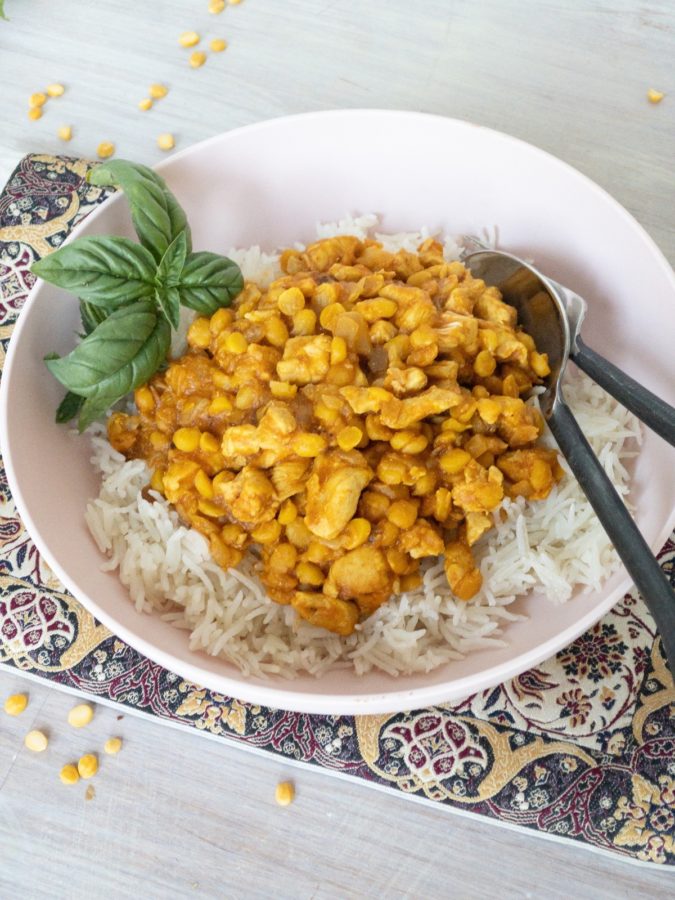
Khoresh Gheymeh | Persian Yellow Split Pea Stew is a common traditional stew in Iranian cuisine. It is served over a beautiful serving of Basmati rice. The name for this meal in Farsi is Khoresh Gheymeh. Gheymeh is most definitely on our favorite Persian foods list. The spice profile of Gheymeh includes many delicious elements including the aromatic spices of turmeric, a touch of cinnamon, saffron, plus generous sour notes from sour Persian limes (limoo omani).
One of the things that make this dish a fan favorite is French fries – yep, you heard that right. French fried potatoes are sprinkled on top of khoresh ghemeh just before serving.
Our grandmothers surely peeled, chopped, and cooked the fries from scratch. In our modern rendition, we use easy store-bought shoestring potatoes, also known as potato sticks. Growing up, my mom has been known to slip out to MacDonald’s for that special indulgent French fry topping. Our visiting relatives and friends were extra amused by this westernized take.
Modern twist on Khoresh Gheymeh
Khoresh gheymeh is traditionally cooked with beef or lamb. In our family, we choose to cut down on the consumption of red meat and have altered the recipe to be made with chicken. Khoresh in Farsi means stew.
Stews in Persian cuisine are not meant to be eaten like soup. They are meant to be served on top of a heaping bed of basmati rice. Gheymeh in Farsi means small chops of meat. We keep the tradition alive by chopping the chicken in this recipe into small cubes.
This recipe can easily be made vegetarian by removing the meat from the recipe. Split peas are nutritious and a good meat substitute for vegans and vegetarians.
Health benefits of split peas:
- high vegetable-based protein
- nutritious fiber
- good source of complex carbohydrates
- low fat and low caloric density
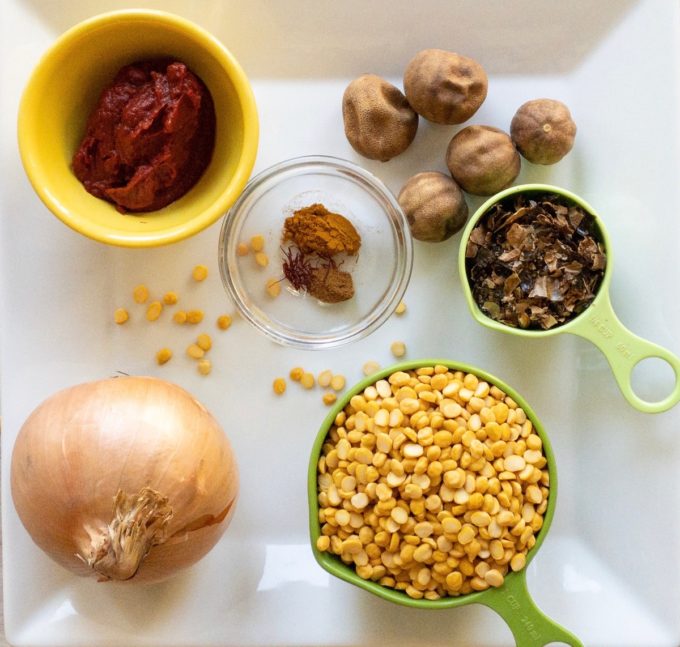
Of all the Persian stews, gheymeh is one of the tangiest or sour dishes.
Sour Persian limes are cooked in with the stew (pierced before-hand so the lime juice seeps through). Another technique often used in this stew is to crush or grind the dried limes into a powder for even more citrus zest.
We love our gheymeh extra sour and choose to crush the dried lime to incorporate it with the tomato sauce leaving tangy bits and resulting in a delicious balance of flavors. (see recipe notes for specific technique on doing this).
If you are unable to get ahold of Persian dried limes, fresh lime juice may be substituted. You can even add lemon juice to give it an extra sour punch.
A unique ingredient in Gheymeh is yellow split peas. We’ve certainly heard and seen green split peas in Western cuisine. Yellow split peas are less common. To me, the taste of green split peas and yellow split peas are quite different. Although they look similar, yellow split peas are also very different from lentils.
Yellow Split Peas
Cooking yellow split peas to the right softness for this khoresh (stew) is a bit of a science. Having the yellow split peas cooked perfectly is something that seasoned Iranian chefs feel proud of. It’s the same pride Iranians have for what they consider to be a perfectly cooked rice. The peas, also known as gheymeh, should be cooked, slightly soft, not crunchy, and definitely not mushy. I had intimidation for making this dish on my own for years. Once I became a mum myself and witnessed how much our kiddos love it to I jumped in headfirst.
Split peas absorb water and cook quickly (they are split in half along the natural seam after they are harvested and hulled). Split peas do not need to be pre-soaked. When overcooked, they become mushy and less appetizing…still delicious, I’ve definitely done it more than once.
Cooking yellow split peas is a delicate balance. Converse to mushy peas, if you undercook them the result is less severe but a crunchy pea is not optimal and could cause some stomach discomfort.
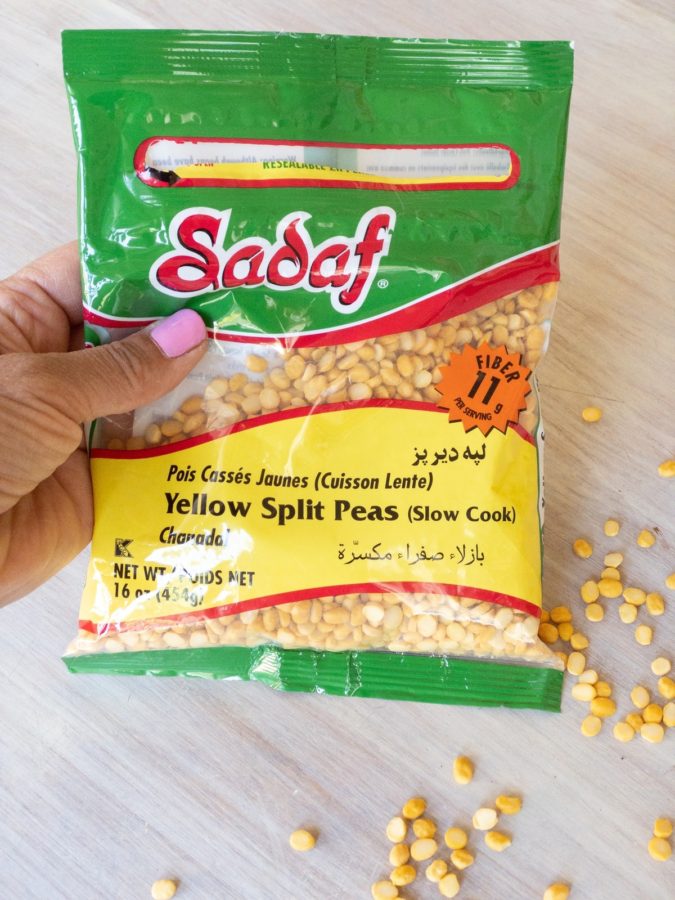
Thankfully, there is a variety called ‘slow cook’ (‘dir paz’ in Farsi) that is hard to mess up! Lapeh Dir Paz = Slow Cook Split Peas = they will not overcook and get mushy.
The best way to serve and eat Khoresh Ghemeh, Persian Yellow Split Pea Stew, is poured on a heaping bed of luscious basmati rice. See How to Cook Persian Rice in a Rice Cooker.
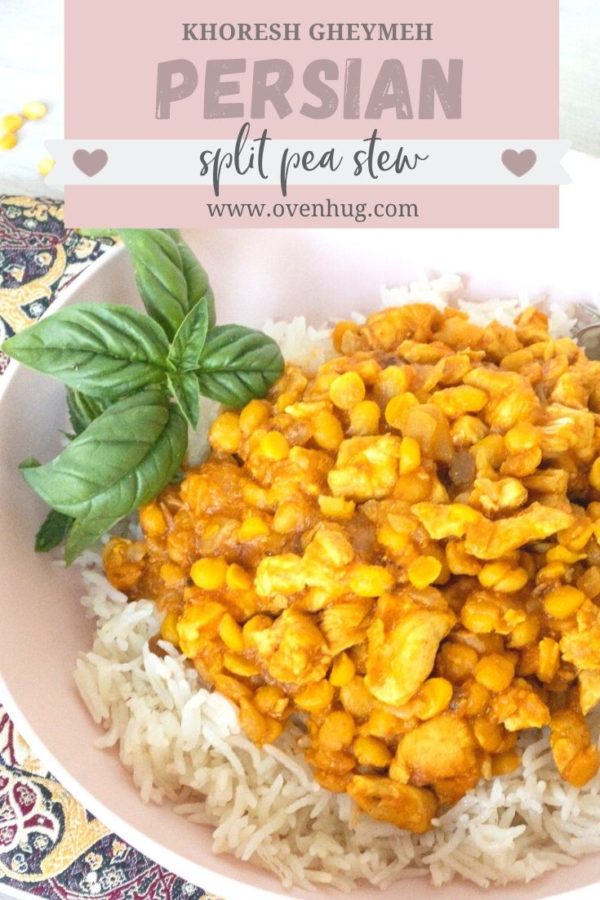
Persian Yellow Split Pea Stew | Khoresh Gheymeh
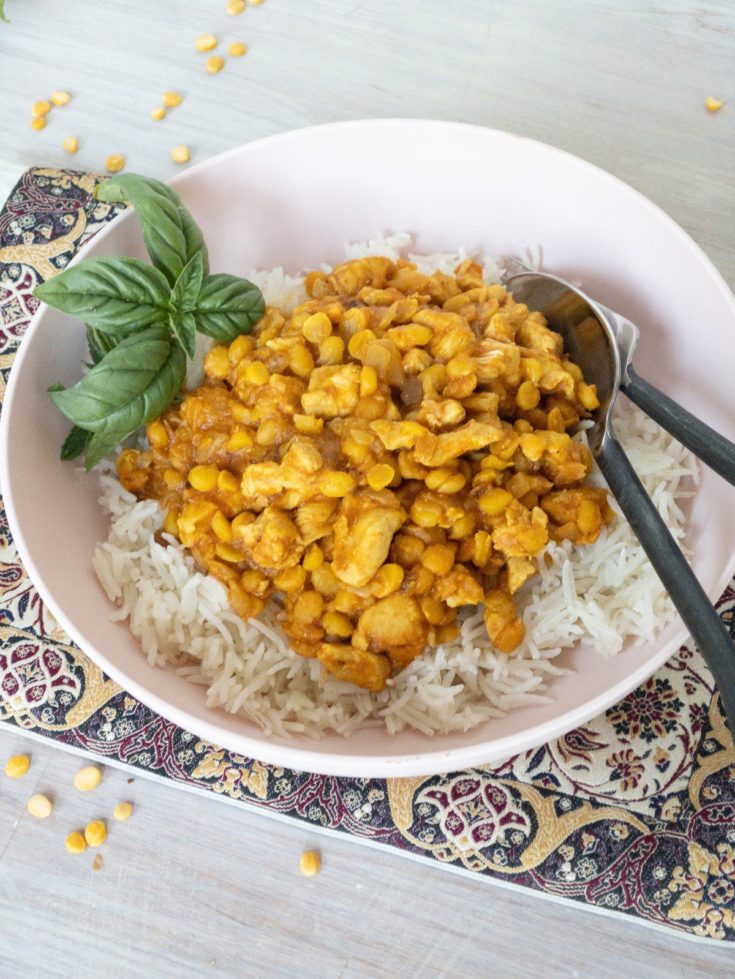
Persian Yellow Split Pea Stew is a common traditional stew in Iranian cuisine served over rice. The name for this meal in Farsi is Khoresh Gheymeh. Gheymeh is most definitely on our favorite Persian foods list. The spice profile includes many delicious elements including the aromatic spices of turmeric, saffron, and a touch of cinnamon, plus generous sour notes from sour Persian limes (limoo omani). One of the things that make this dish a fan favorite since ever our girls were very young is French fries - yep, you heard that right. French fried potatoes are sprinkled on top of khoresh ghemeh just before serving.
Ingredients
- 1 large onion, chopped
- 2 tablespoons olive oil
- 1/2 teaspoon turmeric
- 1/8 teaspoon cinnamon
- 1/2 teaspoon saffron dissolved in 2 tablespoons of boiling water
- 1 pound, boneless, skinless chicken (about 2 large chicken breasts) chopped into small pieces about 3/4 inch in size
- 3 tablespoons tomato paste
- 4 1/2 cups water
- 1 cup slow cook (dir paz) yellow split peas
- 1 1/2 teaspoons salt
- 4 to 5 turns of a pepper mill for fresh ground pepper
- 1/4 cup crushed dried Persian limes (see recipe notes) or about 4 to 5 dried limes; may be substituted with lime or lemon juice
- 2 tablespoons lemon juice (optional)
Instructions
- Chop the onion
- Heat oil in a large, deep pan
- Saute onion until translucent, about 5 to 7 minutes on medium-low heat
- Add the spices to the onions and stir
- Chop the chicken into small pieces, about 3/4 inches
- Add chicken and cook on all sides for about another 5 to 7 minutes
- Add in the tomato paste, stir until all of the chicken and onions are coated, and cook for about another 2 minutes
- Add water and split peas, stir in salt and pepper, cover, and cook for 30 minutes
- Remove cover, taste, adjust salt, and add crushed dried limes and lemon juice
- Re-cover the pan and simmer about another 15 minutes until the peas are tender but not mushy - turn the heat slighter higher to burn off more liquid
Notes
To crush Persian dried lime, use a hammer to gently crush the shells of the dried lime. I use the peel, the seeds and all of the lime in this recipe.
Nutrition Information:
Yield:
6Serving Size:
1Amount Per Serving: Calories: 107Total Fat: 5gSaturated Fat: 1gTrans Fat: 0gUnsaturated Fat: 4gCholesterol: 0mgSodium: 14mgCarbohydrates: 15gFiber: 4gSugar: 4gProtein: 4g

It’s the minced meat that makes it ghaymeh not split yellow peas as article claims.
good point! yes, it means a fine chopping of meat. thank you!
Is this nutritional info correct? 4g protein per portion doesn’t seem much for a dish which includes chicken and split peas? Can’t wait to cook this though. 😊
Hi Debbie, the nutritional value is based on the recipe and the portion sizes indicated in the recipe. I’ll make it again soon and confirm the information is accurate. I agree that the amount of protein seems a little low given healthy yellow split peas and chicken in the yummy stew. Please share how you like it and give the recipe card a star rating – many thanks!
I’ve noticed that the serving size listed in the nutritional info says “6” whereas in the main recipe it says “4”, so perhaps that’s why it’s coming out low?
Hi Saskia, thanks for catching that. I will make it again and measure out the portions to confirm which it is. – Bita
HiBita! Love this recipe! Ghaimeh has always been a family favorite. You give a very thoughtful description of the Yellow Splits used in this recipe, and explain that they are Lapeh Dir Paz in Farsi. In my experience, what most cooks and readers don’t realize, is that the Iranian Lapeh Dir Paz is the same as the Indian Chana Dal. See the Sadaf label, and one the left side it says Channadal. Every Indian grocery store sells these as Channa Dal, so I feel if readers knew this, it would be very helpful.
Happy cooking!
Hi Brett, thanks for your comment. Interesting cross-over with Indian cuisine! Good to know that the yellow split peans, lapeh is the same as Indian chana dal – I am not familiar with shopping for dal so appreciate the information. Happy cooking to you!
Thank you for posting this, I did think they looked more like chana dal than the yellow split peas I’m familiar with! Yellow split peas here (UK) look just like the green ones but yellow (larger than these, and smooth and round), whereas chana dal is smaller and looks almost slightly wrinkled with a slightly irregular shape. The fact that the recipe also mentioned that they taste different to green split peas also made me suspicious they might in fact be chana dal, since yellow and green split peas have a fairly similar taste, whereas chana is definitely different.
I missed the fact it said “chanadal” on the packet due to the light reflection!
It’s very useful to know this as I’d imagine the result would have been rather different if I’d just used split peas! Although I’m sure it would still be nice.
I’m from the UK and looking to use some ordinary yellow split peas for this recipe. I’m not sure of any of the differences described above, hopefully it turns out OK!
Hi Caitlin. I understand. Not everyone has the luxury of middle eastern and Persian markets at their fingertips. Regular yellow split peas should be just fine. Just watch over them so they don’t overcook and become mushy. Good luck and report back how it goes!
Thank you for the delicious recipe. I enjoyed cooking it and eating it too. 🙂
Happy to hear that Mary and thank you for your feedback. Please give the recipe a star rating which will help our ratings in Google search, many thanks.